Unequal Partner
A little context for non-Malaysian friends: Malaysia was formed on September 16, 1963 and not on Merdeka Day (Malaya’s Independence Day), August 31, 1957. Malaysia’s birth was through an international agreement called the Malaysia Agreement 1963 (MA63) which was signed between UK, Federation of Malaya, North Borneo (Sabah), Sarawak and Singapore (Which later seperated in 1965 due to racial tension). Without MA63, there would be no Malaysia. Over the years, Merdeka Day has still continued to overshadows Malaysia Day celebrations, thus igonring its significance. This is one of the few but main example of dramas between Peninsular (West) Malaysia and East Malaysia (Bornean States)
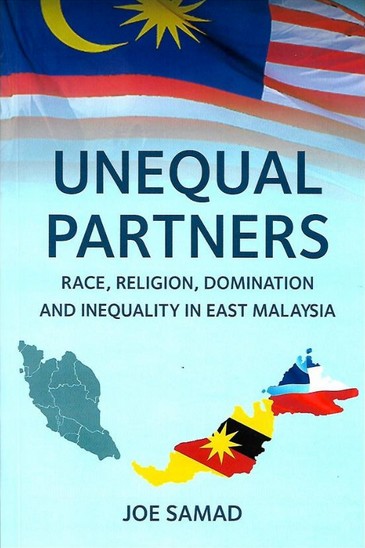
Joe Samad (Dr. Johan) is a columnist for the news outlet Free Malaysia Today, and this book is a collection of his writings. Although the cover states “Inequality in East Malaysia”, the book dominantly covered more on Sabah over Sarawak.
At first, it’s an interesting read. The author covers news and history of Sabah that are not well known but very impactful. One such example is the Malaysia Agreement 1963 (MA63) inscribed on the Keningau Oath Stone, which summarises the agreement and involved a ceremonial ritual and animal sacrifice by a bobolian (High Priestess). The stone was vadalised 2014, which many Malaysians have forgotten. In addition to the vandalised stone, there were multiple examples of federal government missteps during COVID-19 period, which we have forgotten as well.
The author has clearly shown disdain toward UMNO, the conservative Malay nationalist political party for sticking its nose into Sabah politics and their constant attempts at playing the race card to create division among the people. The author is a strong critic of Mahathir Mohamad, who was a Malaysia’s prime minister from 1981 to 2003 and again from 2018 to 2020. Mahathir Mohamad was known to treat Sabah as his own chessboard to experiment with multiple political agendas, such as in 1994 where Mahathir introduced the rotation of Sabah’s chief minister among ethnic group which led more power to the central government to control over Sabah politic and further hampered Sabah’s development.
The book hardly covers Sarawak despite being written in an East Malaysia context. As the chapter progress, the tone grows repetitive and tend to criticize a lot instead of covering history. For those who want to remember missteps from our past politicians, this book succeed as a reminder. But we have to read it through an objective lens as not to be swayed by anger and to remember that the author obscures positive progress and reforms.
In short, it is also a strong reminder to East Malaysians to uphold the importance of MA63 and to learn from our past mistakes to be a better nation as a whole.