Saving The Planet
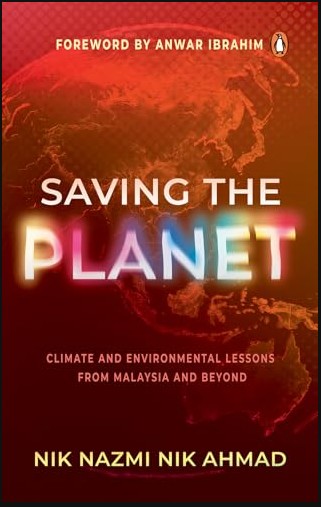
When I first came across Saving the Planet after it was recommended by Malaysia’s former Minister of Natural Resources and Environment, Nik Nazmi Nik Ahmad. He urged not only the public but also leaders around the world to read it. I was skeptical at first. Coming from a background in law, I wondered what authority he really had on environmental issues. On top of that, the book cost RM80, which felt steep compared to the already overpriced titles at Popular Bookstore. For months, I hesitated.
Eventually, I decided to take a leap of faith and bought the book. It turned out to be the right decision. From the very first chapters, the book completely exceeded my expectations. It is remarkably comprehensive and offers rare insight into Malaysia’s role in the global environmental movement. Many of the policies discussed are ones most Malaysians are either unaware of or do not even realize exist. Reading it feels like walking alongside the author during his time as a minister, gaining an inside view of the challenges faced, the constraints within government, and the difficult trade-offs involved in environmental decision-making.
What makes the book especially compelling is that it does not confine itself to Malaysia alone. The author draws on real-world examples of natural disasters, governance failures, and environmental mismanagement from other countries to place Malaysia’s experience in a broader global context. This comparative approach makes the lessons more concrete and harder to dismiss as abstract theory.
Throughout the book, I found myself underlining passages and taking extensive notes. It significantly expanded my understanding of sustainability and climate change, not just as concepts, but as lived policy realities. By the end, I felt that every minister should be required to write a book reflecting honestly on their work and the realities of their portfolio. Such transparency would do a great deal to improve public understanding and trust.
Overall, this is a must-read for anyone who wants to understand what Malaysia is doing in the climate and environmental space, and what role the country plays within the wider global movement. It is equally valuable for readers who simply want a clearer grasp of climate change, climate resilience, and sustainability. The writing is accessible, the English is simple, and yet the content is dense with information and lessons. Despite being just over 200 pages, it took me nearly a month to finish because of how much there was to absorb. Easily one of the books of the year for me, and one I expect to return to many times.