Silent Spring
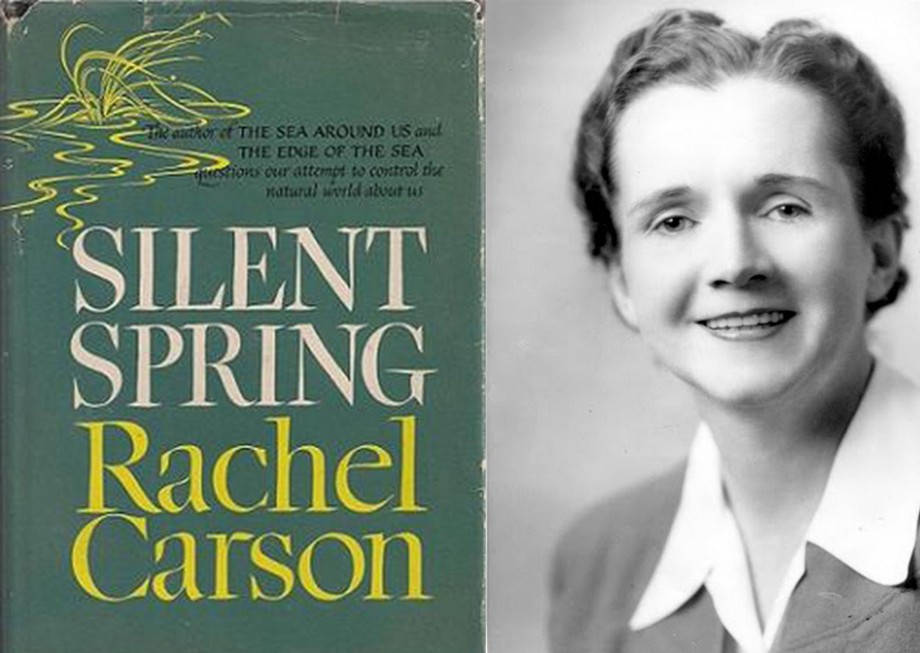
This book was first recommended to me by a renowned professor in my university. He was giving a speech in front of our pest and disease industry partners and, at the end, he showed a slide of books he thought everyone in the room should read. I quietly took a picture of that slide. One of the titles was The Pesticide Conspiracy by Robert van den Bosch, and another was Silent Spring. Later, I shared the picture with my book club and that was when I learned how influential Silent Spring really is. People told me this was one of the books that helped spark the modern environmental movement. I was honestly surprised that I was only discovering it now.
Reading it, I realised how much of what Carson described is still echoing in today’s agricultural industry. Many of the pesticides and herbicides we use now are less harmful to humans and the environment, at least compared to the early days, and that is partly because of the questions she forced the world to ask. Regulations, testing protocols and public awareness did not appear out of nowhere. They were built on the kind of unease and evidence that she put into this book.
Rachel Carson herself was also swimming against the current. She was a woman who pursued marine biology at a time when women in science were often not taken seriously. She sometimes wrote under the name “R. L. Carson” so that editors and readers would focus on her work instead of dismissing her because she was a woman. Knowing that makes her persistence in writing Silent Spring even more striking.
In the book, she highlights the dangers of a group of insecticides called chlorinated hydrocarbons. The most famous example is DDT, which was widely used in the 1950s. Other chemicals in this family include dieldrin, aldrin, endrin, chlordane, heptachlor, benzene hexachloride (BHC) and lindane. These compounds are very persistent. They do not wash off easily in rain or break down quickly in soil, and they are fat soluble, which means they can be stored in body fat for a long time. Because of this, they build up along the food chain. A tiny dose in an insect becomes a higher dose in a fish, and an even higher dose in a bird that eats many contaminated fish. Carson describes how this bioaccumulation led to serious problems, such as bird embryos failing to develop properly and populations of birds crashing, which then affected the rest of the ecosystem. It is a reminder that we are always touching a whole web of life.
She also explains another major group of insecticides, which she calls the organic phosphorus compounds, now more commonly known as organophosphates. Examples include parathion, malathion, TEPP, hexaethyl tetraphosphate and systox. These chemicals tend to be less persistent in the environment, so they do not build up in the same way as DDT. However, they are extremely toxic because they act directly on the nervous system. They interfere with the enzyme that helps shut off nerve signals, so the system gets stuck in an “on” position. In practical terms, that means even small mistakes in handling or exposure can be deadly, not only for insects but also for farm workers, children and anyone else who comes into contact with them. Carson also spends time on how these products were sold to the public. When she writes about dieldrin, she describes advertisements on pesticide labels that showed a happy family scene, with a smiling father and son spraying the lawn while small children roll on the grass with the dog. The violent nature of the chemical is completely hidden behind that picture. Reading that, I could not help comparing it to how pesticide labels look in Malaysia today. Our labels are now much stricter. They must show the poison class, clear hazard symbols and warnings about how harmful the product can be to humans and environment.
I would highly recommend this book to junior agronomists, researchers and anyone working in the agricultural, pest and disease industry because it teaches you to look beyond the product label and the trial results. Silent Spring is not just about “bad pesticides”. It shows how decisions made in the name of progress can quietly reshape entire ecosystems, harm communities and then only be recognised years later. For people like us who work close to the land, this book is a reminder that every spray, every recommendation and every “standard practice” has a history and a cost. It encourages a kind of professional humility, to ask harder questions about safety, non-target effects and long term consequences, instead of assuming that if something is registered, it must be fine. That mindset alone makes it worth reading.