The Prince by Niccolo Machiavelli
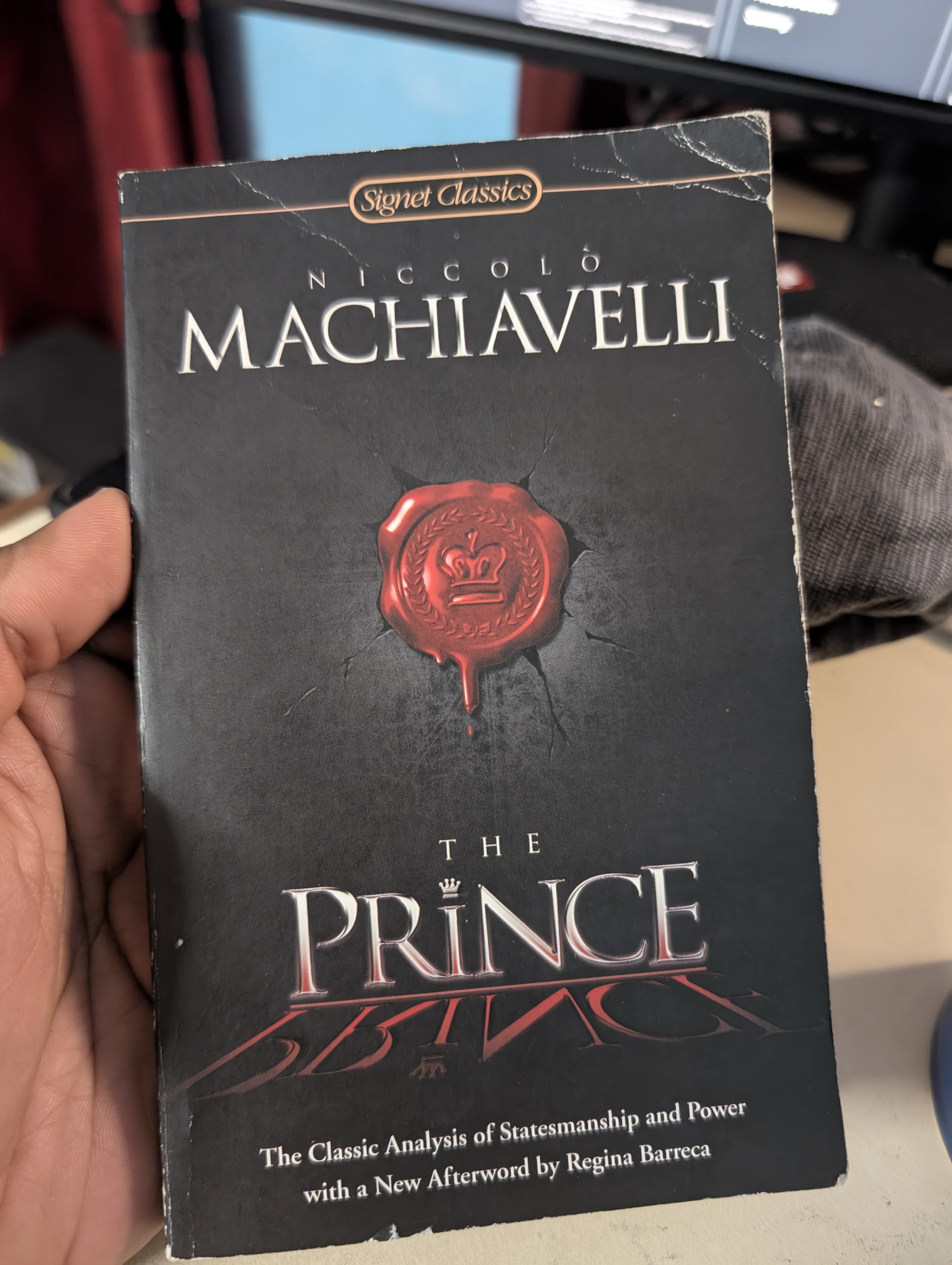
This book was not what I expected. People often say it’s a dangerous or “bad” book because it supposedly inspired controversial figures such as:
- Napoleon Bonaparte
- Otto von Bismarck – the man who unified Germany
- Adolf Hitler
- Joseph Stalin
But to me, this only shows how practical and brutally honest Machiavelli’s advice is when it comes to politics and power. Contrary to popular belief, the book doesn’t feel evil, nor does it inspire me to become a dictator.
Instead, reading The Prince felt like opening a third eye. It gave me a new lens to understand how history tends to repeat itself through different leadership styles, and how leaders lose power and respect. I particularly appreciated how Machiavelli used real leaders from his time as examples. At first, I found it difficult to grasp some of the concepts, but eventually, everything began to fall into place.
The book covers a wide range of topics: how power is gained, how it’s maintained through military strength or political strategy, and the flaws and dangers in each method. It also discusses how rulers can consolidate their power more effectively once they have it.
One of the most widely misunderstood quotes about Machiavelli is:
“It’s better to be feared than loved.” This is often taken out of context. The full quote is actually: “It is much safer to be feared than loved, when, of the two, either must be dispensed with. But he ought to be careful not to make himself hated.”
In short: Fear is only useful only if your people doesn’t start to hate you. This is a recurring theme in the book:
“He who becomes hated is at risk of being overthrown, even if he has the strongest army.”
Such lesson from this book can be used to reflect the current affair of our time’s world leader and how history will unroll.